When God Changes Your Name....

24/6/25
The Covenant of Names: Abraham, Sarah, and the Meaning of Genesis 17
In Genesis 17, God renames Abram to Abraham and Sarai to Sarah, a key moment that defines His covenant with Israel’s patriarch and matriarch. This renaming isn’t just a surface change; it carries deep theological, linguistic, and cultural meaning. Abraham’s shift from אַבְרָם (Avram) to אַבְרָהָם (Avraham) often gets more attention, but Sarah’s change from שָׂרָי (Sarai) to שָׂרָה (Sarah) is just as significant, showing her vital role in the covenant. By exploring the meaning behind their names, the promises God makes, and the wider impact of these changes, we gain a clearer picture of their roles as the father and mother of many nations.
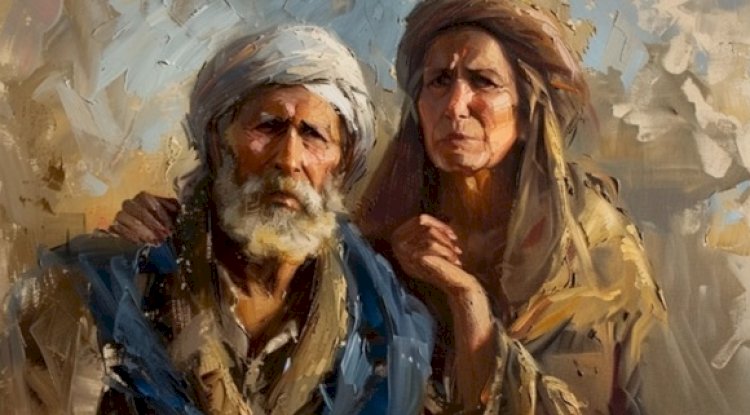
The Name Change of Abram to Abraham
The name אַבְרָם (Avram) comes from two Hebrew words: אַב (av), meaning “father,” and רָם (ram), meaning “exalted” or “high.” So, Avram means “exalted father,” a name that suggests respect but is tied to his local family. In Genesis 17:5, God says, “No longer shall your name be called Abram, but your name shall be Abraham; for I have made you a father of a multitude of nations.” The new name, אַבְרָהָם (Avraham), combines אַב (av) with הֲמוֹן (hamon), meaning “multitude,” as seen in the phrase אַב־הֲמוֹן גּוֹיִם (av-hamon goyim), “father of a multitude of nations.”
Adding the letter ה (he) is a big deal. In Hebrew, letters have special meanings, and ה appears in God’s name, יהוה (YHWH), hinting at His creative power. Putting ה in Avram’s name is like adding a touch of God’s presence, turning him from a local leader into a father of many nations. The letter ה has a numerical value of 5, which some Jewish traditions link to the five books of the Torah, connecting Abraham’s future to God’s law and covenant.
The sound of Avraham is also softer than Avram. The harsh רָם (ram) becomes the open הֲמוֹן (hamon), reflecting how Abraham’s role grows from a family leader to a global figure. One small letter changes everything, showing the huge scope of God’s promise.
Sarai to Sarah: A Matching Change
Sarah’s renaming in Genesis 17:15-16 is just as important: “God said to Abraham, ‘As for Sarai your wife, you shall not call her name Sarai, but Sarah shall be her name. And I will bless her and also give you a son by her; then I will bless her, and she shall be a mother of nations; kings of peoples shall be from her.’” The names שָׂרָי (Sarai) and שָׂרָה (Sarah) come from the same Hebrew root, שָׂר (sar), meaning “ruler” or “prince,” which suggests strength and authority. Both names mean “princess” or “woman of strength,” but they differ slightly.
Sarai likely means “my princess,” with the ending ־ַי (-ai) showing possession, suggesting her role was tied to Abraham’s household. Sarah (שָׂרָה), without the possessive ending, points to a bigger role. Like Abraham, her name gains the letter ה (he), linking her to God’s blessing. Sarah’s new name shows she’s not just a wife but a mother of nations and kings, as God promises.
The change from י (yod) to ה (he) mirrors Abraham’s renaming. The letter י, worth 10 in Hebrew, is small and suggests a starting point. The letter ה opens the name up, matching Sarah’s new role as a global matriarch. The sound of Sarah is smoother than Sarai, with ה giving it a softer, universal feel, reflecting her wider influence.
Covenant and Gender: Equal Partners
The renaming of Abraham and Sarah shows they are equal partners in God’s covenant. Abraham often gets the spotlight, but Genesis 17 makes clear Sarah is just as important. God’s promise to Sarah—“she shall be a mother of nations; kings of peoples shall be from her”—matches His promise to Abraham, showing she’s a key part of the covenant. Both receive the letter ה, proving they share God’s blessing and purpose.
This equality challenges ancient cultural norms, where women were often seen as less important than men. By giving Sarah a new name and a big promise, God lifts her up, showing her strength goes beyond her home. Her title “princess” (שָׂרָה) highlights her authority, seen later when she makes tough choices, like sending Hagar and Ishmael away (Genesis 21:10–12).
Sarah’s Legacy and the Bigger Story
Sarah’s renaming is especially powerful because she was barren (Genesis 11:30). In her time, not having children was a source of shame, but God turns her from an outsider to a mother of nations. Her laughter in Genesis 18:12, often seen as doubt, can also show her surprise at God’s bold promise—a barren woman giving birth to kings. This shows how God picks unlikely people, like Moses or David, to do great things.
Sarah’s influence goes beyond Israel. In Galatians 4:22–31, Paul calls her the mother of the “children of promise,” contrasting her with Hagar. In 1 Peter 3:6, she’s a model of faith for a believing women. Her name, שָׂרָה, becomes a symbol of strength and hope.
Conclusion
The renaming of Abram to Abraham and Sarai to Sarah in Genesis 17 is a beautiful blend of language and faith, showing the power of God’s covenant. Adding the divine letter ה to their names marks them as the father and mother of nations, filled with God’s presence. Sarah’s renaming, often overlooked, is just as vital, proving she’s an equal partner in God’s plan and a matriarch whose legacy lasts. With just one letter, God redefines their lives, tying them to a mission that still echoes in history. This story invites us to think about the power of names, the weight of God’s promises, and the lasting impact of those chosen to carry them.
What's Your Reaction?