What Is the Point of a Priest?

"every high priest chosen from among men is appointed to act on behalf of men in relation to God, to offer gifts and sacrifices for sins" (Heb. 5:1, emphasis added).
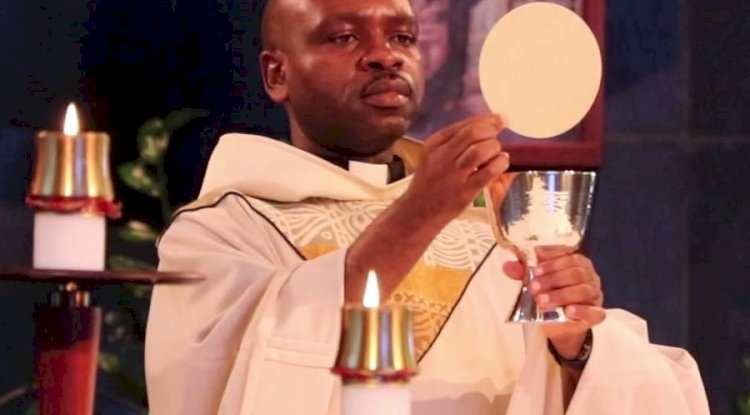
Some critics contend that bread and wine do not constitute the rite stuff of a biblical offering—pun intended—including because no living animal is slaughtered in sacrifice. The Bible testifies otherwise, as the Israelites offered such with a daily lamb sacrifice:
. . . with the first lamb a tenth measure of fine flour mingled with a fourth of a hin of beaten oil, and a fourth of a hin of wine for a libation (Exod. 29:40; see Lev. 23:13).
Scripture discusses Melchizedek minimally. The high priest interacts briefly with Abram in Genesis 14, the Psalmist references Melchizedek once (Ps. 110:4), and the author of Hebrews discusses him in chapter 5-7, explaining how Jesus is “a priest forever according to the order of Melchizedek” (for example, 5:6, 10). So if Melchizedek 1) is a priest, 2) makes only a brief cameo in Genesis 14, and 3) the prime function of a priest must be “to offer gifts and sacrifices for sins” (Heb. 5:1), isn’t it logical to infer that his priestly offering was indeed bread and wine—and thus not surprising that Jesus offers his body and blood under the appearances of bread and wine (according to the order of Melchizedek)?
In this important light, I contend that Hebrews 5:7-10 is the most profound passage in the biblical story of the Mass:
In the days of his flesh, Jesus offered up prayers and supplications, with loud cries and tears, to him who was able to save him from death, and he was heard for his godly fear. Although he was a Son, he learned obedience through what he suffered; and being made perfect he became the source of eternal salvation to all who obey him, being designated by God a high priest after the order of Melchizedek.
Same Sacrifice of Calvary; Different Manner of Offering “the Gift that Keeps on Giving”
In other words, Jesus’ Melchizedekian priesthood is intimately linked with and activated through his one sacrifice of Calvary, in which he suffers, dies, rises from the dead, and ascends into heaven, where his sacrifice culminates in everlasting glory in atonement for our sins (see Heb. 8:1-3; 9:11-14, 23-24). Consequently, Christ’s saving ministry will continue through the offering anew of his one sacrifice according to the order of Melchizedek—that is, under the forms of bread and wine as Jesus first instituted the sacramental form of his one sacrifice at the Last Supper in a bloodless yet truly propitiatory manner—and so commanded his apostles to continue offering salvifically in liturgical remembrance of him: “Do this in memory of me” (CCC 1363-1367, Luke 22:19-20, 1 Cor. 11:23-25).
The sacramental re-presentation of Christ’s one redemptive sacrifice at Mass illustrates that we are really offering Jesus—body, blood, soul, and divinity—as the high priest par excellence unites heaven and earth in the offering of his one sacrifice, and thus we necessarily also partake of Jesus anew in receiving the Holy Communion, the fruit of his eucharistic sacrifice.
The Eucharist: Real Flesh and Blood or Merely Symbolic “Bread from Heaven”?
We can further grasp the real presence of Christ in the Eucharist through examining Jesus’ “Bread of Life” discourse in John 6. Jesus compares himself to the manna his heavenly Father gave the Israelites to sustain them en route to the Old Covenant promised land (John 16:30-34; see Exod. 16:4-35).
Jesus sets up his discourse within a Passover context (John 6:4), in which the Lord shows he can feed five thousand men (not including women and children) through blessing a mere five loaves and two fish. This miracle anticipates how Jesus—”the bread which came down from heaven” (John 6:41)—will feed much greater multitudes through the Holy Eucharist on the faithful’s collective journey to our heavenly promised land.
Scripture affirms that Jesus is the New Covenant Lamb of God (John 1:29, 35 and 19:36; 1 Cor. 5:37). If consumption of Jesus were merely symbolic, that would be an anticlimactic fulfillment of the Old Covenant version, which involved both the offering or slaughter of a lamb, and its consumption by God’s people.
Some recoil at the thought of eating Christ’s body and blood, saying it would be a form of cannibalism. In addition, they argue that consumption of blood is prohibited in the Old Covenant (Lev. 17:10-14), because sacrificial blood was set aside to atone for our sins. However, the shedding of Jesus’ blood does atone for our sins (Heb. 9:11-14), and beyond that, its consumption, as Jesus teaches, provides us eternal life (John 6:53-55).
In addition, Christ’s disciples take him literally, and Jesus does not correct their understanding, even when they walk away (John 6:66). They knew that Jesus wasn’t speaking figuratively
because an ancient Hebrew idiom already assigned a figurative meaning to eating someone’s flesh: it meant to slander someone or even desire his death. For his hearers, in the figurative sense Jesus would’ve been promising heaven to those who maligned him; an absurdity that would’ve made Christ’s words laughable, not “a hard saying” (see Ps. 27:2). Instead, many Jews sought to kill Jesus (John 7:1) because they inferred he was indeed commanding them to actually drink his blood, which, in their minds, was an apparent and grave violation of Old Covenant law (Lev. 17:10-14, Deut. 13:1-5; see Gen. 9:4).
Given the common perception that consuming the Eucharist would cut one off from Old Covenant Israel because it required the consumption of Christ’s real blood, Jesus’ invitation to his first disciples required great faith, the radical trust of a child (Matt. 18:1-4). That’s why they “took offense” (Greek: skandalon) at his teaching: because Christ’s “hard saying” was scandalous, and thus a “stumbling block” to them.
Therefore, Jesus makes clear that believing in him is not a mere intellectual assent by which one attains salvation, as some argue by taking some of his words and those of St. Paul out of context (John 6:28-29, 47; see Rom. 10:9-10). Rather, we attain salvation through abiding in Jesus, which includes confessing and faithfully receiving the Eucharist (John 6:56; see 15:10-11).
What's Your Reaction?