What Did the Bible Look Like in the Early Church?

Proponents of the Protestant belief in Sola Scriptura believe that the Bible is the sole infallible source of authority for Christian faith and practice, above tradition, reason, or church leaders.
But what about the Early Church? What did their Bible look like? What books did they reference when they needed an answer?
Let's take a look!
Since Protestants rely solely on Scripture for their faith, when they learn about the early Church and the role of Sacred Tradition, they often ask what was going on with the Bible during that time. The truth is, the canon of Scripture (the official list of the Bible’s contents) was not settled during the early Church period. That doesn’t mean Scripture played no part, but the Bible per se did not play the same role then as it does for many non-Catholics today.
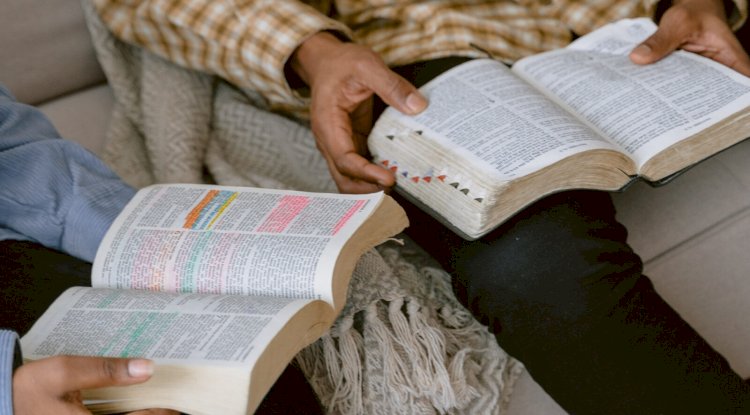
As the New Testament books were written, they were not immediately recognized as Scripture by the Magisterium. It took some time for the many various writings of the first century to be sorted out and an official canon of the New Testament to be settled. Ever since that canon was settled, almost all Christians have continued to hold to it.
The Old Testament canon is a bit different. The Septuagint (a Greek version of the Old Testament translated by the Jews in the second and third centuries B.C.) was largely accepted in the early Church. In fact, Jesus and the New Testament authors, when quoting from the Old Testament, quote most often from the Septuagint.
This is important to know because, when the Old Testament canon was finally settled under the authority of Pope Damasus (r. 366-384) at the Council of Rome in 382, it looked a lot like the Septuagint. The Catholic Church continues to adhere to that same canon today.
However, during the Protestant Revolution, Protestants removed seven books from the Old Testament canon—Tobit, Judith, 1 and 2 Maccabees, Wisdom, Sirach, and Baruch—as well as parts of Daniel and Esther. They did so primarily for doctrinal reasons. Therefore, their Bibles differ from Catholic Bibles today.
Many Protestants are taught that it was not their founders who removed books from the canon, but Catholics who added books to it. They mistakenly believe that those books were never revered as Scripture by Christians. But quotations from early Christian writings demonstrate that the early Church did revere books that were removed from the canon by Protestants.
The Didache, a first-century catechism, quotes from the book of Sirach: “You shall not waver with regard to your decisions [Sir. 1:28]. Do not be someone who stretches out his hands to receive but withdraws them when it comes to giving [Sir. 4:31].” Clement of Rome, the fourth pope, draws from the book of Wisdom: “By the word of his might [God] established all things, and by his word he can overthrow them. ‘Who shall say to him, “What have you done?” or who shall resist the power of his strength?’ [Wis. 12:12].” Polycarp of Smyrna (A.D. 69-155) quotes from the book of Tobit: “When you can do good, defer it not, because ‘alms delivers from death’ [Tob. 4:10; 12:9].”
In his famous work, Against Heresies (A.D. 180), Irenaeus cites a part of the book of Daniel that was removed from Protestant Bibles:
They shall hear those words to be found in Daniel the prophet: “O you seed of Canaan and not of Judah, beauty has deceived you and lust perverted your heart” [Dan. 13:56]. You that have grown old in wicked days, now your sins which you have committed before have come to light, for you have pronounced false judgments and have been accustomed to condemn the innocent and to let the guilty go free, although the Lord says, “You shall not slay the innocent and the righteous [Dan. 13:52, citing Exod. 23:7].”
In the same work, Irenaeus also quotes from Baruch: “Look around Jerusalem toward the east and behold the joy which comes to you from God himself. Behold, your sons whom you have sent forth shall come: they shall come in a band from the east to the west. . . . God shall go before with you in the light of his splendor, with the mercy and righteousness which proceed from him’ [Bar. 4:36–5:9].”
St. Hippolytus (d. 236), too, quotes from a part of the book of Daniel unique to the Bible as established by the Catholic Church:
What is narrated here [in the story of Susannah] happened at a later time, although it is placed at the front of the book [of Daniel], for it was a custom with the writers to narrate many things in an inverted order in their writings. . . . We ought to give heed, beloved, fearing lest anyone be overtaken in any transgression and risk the loss of his soul, knowing as we do that God is the judge of all and the Word himself is the eye which nothing that is done in the world escapes. Therefore, always watchful in heart and pure in life, let us imitate Susannah.
When commenting the sacrifice of Abraham, St. Cyprian of Carthage (d. 258) quotes from several books eliminated from Protestant Bibles, drawing a parallel between the book of Genesis and the books of Wisdom, Maccabees, and James:
In Genesis [it says], “And God tested Abraham and said to him, ‘Take your only son whom you love, Isaac, and go to the high land and offer him there as a burnt offering’” [Gen. 22:1-2]. . . . Of this same thing in the Wisdom of Solomon [it says], “Although in the sight of men they suffered torments, their hope is full of immortality” [Wis. 3:4]. . . . Of this same thing in the Maccabees [it says], “Was not Abraham found faithful when tested, and it was reckoned to him for righteousness?” [1 Macc. 2:52; see James 2:21-23].
Cyprian also quotes from Daniel: “So Daniel, too, when he was required to worship the idol Bel, which the people and the king then worshipped, in asserting the honor of his God, broke forth with full faith and freedom, saying, ‘I worship nothing but the Lord my God, who created the heaven and the earth’ [Dan. 14:5].”
The world has Catholic questions—lots of them.
Some of them, like this one for instance, require a detailed explanation. But once you have the answers, think about how much better you can defend your Faith!
What's Your Reaction?