My wife, my sister - Abraham's Conundrum in Genesis

Dr. Eli Lizorkin-Eyzenberg 3/7/25
Explore the limits of God’s grace in response to human imperfections of Abraham.

The Book of Genesis stands as a foundational text for many millions of Christians and Jews in the world, weaving narratives that shape their spiritual identity and life direction. At its heart are the stories of Abraham and Sarah, celebrated for their faith in God’s promises (Heb 11:8). Yet, within these accounts lie three troubling episodes where Abraham, and later his son Isaac, deceive foreign rulers they were afraid of by presenting their wives as sisters. Known as the “wife-sister episodes,” these events, recorded in Gen 12:10–20, Gen 20:1–18, and Gen 26:1–11, challenge modern readers with questions of cultural norms, ancient ethics, and God’s response to human flows and imperfection.
For the Israelites, fairly recently liberated from Egyptian slavery, these stories, authored by Moses, served as inspiration and instruction, linking their ancestors’ trials to their own as they continued their 40 year journey from Egypt to the Promised Land. By examining these episodes, we uncover profound lessons about nature of spiritual journey with all its complexity, offering us and anyone who will listen insights into human nature and divine grace that resonate across time.
The Three Wife-Sister Narratives
The wife-sister episodes unfold as three distinct stories, each marked by fear of and deception in a foreign land. In Gen 12:10–20, a famine drives Abram (later Abraham) and Sarai (later Sarah) to Egypt. Fearing that Sarai’s beauty will provoke Pharaoh’s men to kill him, Abram asks her to pose as his sister. Pharaoh, unaware of their marriage, takes Sarai into his harem, rewarding Abram with livestock and servants. God intervenes with plagues, revealing Sarai’s true married status, and an angered Pharaoh expels the couple.
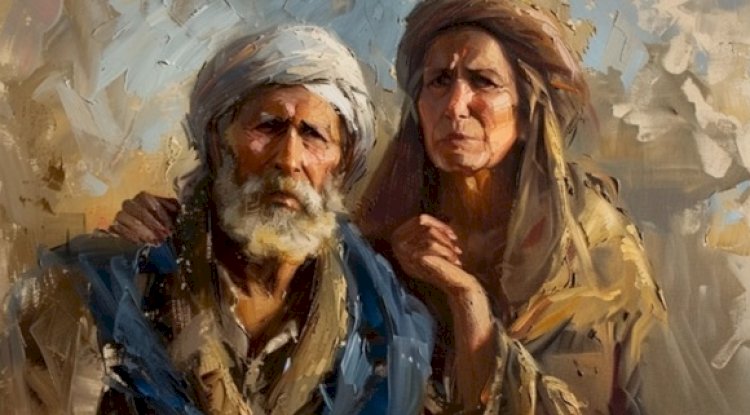
In Gen 20:1–18, Abraham and Sarah, now in Gerar, a Philistine region between modern Gaza Strip and the Dead Sea, experience in some way a deja vu. King Abimelech takes Sarah, but this time Abraham’s God warns the king in a dream, preventing him from sleeping with her and invoking His wrath. Abimelech returns Sarah, compensates Abraham and Sarah with gifts, and graciously invites them to stay in his kingdom.
Finally, in Gen 26:1–11, Isaac, facing famine, moves to Gerar and claims Rebekah is his sister. Abimelech discovers the truth when he sees Isaac flirting with Rebekah, rebukes him, but ensures their safety. These episodes reveal a recurring pattern: the patriarchs, despite their great episodes of faith, resort to deception based on fear and often misjudging the situation entirely, risking their wives’ honor and certainly honor of their God. Yet, their God consistently understands, forgives, protects them and everyone in their caravans that depend on them. Their salvation is a theme that echoed the Israelites’ own deliverance from Egypt and wilderness wonderings through ongoing events involving divine intervention despite significant lack of faith and obedience on behalf of former slaves.
Moses’ Purpose for the Israelites
Torah of Moses included these stories to inspire and instruct the Israelites who had just escaped centuries of slavery in Egypt. As they wandered in the wilderness, grappling with their identity as God’s chosen people, these narratives connected their own struggles and many failures to those of their ancestors. The Abraham and Isaac events in many ways mirrored the Israelites’ sojourn in and out Egypt, where they too endured oppression of the local kings. But just as God protected Sarai/Sarah with plagues in Egypt and divine dream in Gerar, He unleashed plagues and miracles to free the Israelites from bondage, miraculously accompanying them through their wonderings despite their many flows (Exod 7–12).
The Israelites’ wilderness journey was marked by repeated faith-related and fear-based failures, including complaints about food and water (Exod 16:2–3), worship of a golden calf (Exod 32), rejection of the Promised Land after the spies’ fearful report (Num 13–14), and rebellion against Moses’ leadership through Korah’s uprising (Num 16). They succumbed to idolatry and immorality at Baal Peor (Num 25), grumbled over manna (Num 11, 21), and quarreled at Meribah, where even Moses disobeyed (Num 20).
By highlighting God’s faithfulness despite human flaws, Moses encouraged the Israelites to trust in God’s covenant promises, as their forefathers had, and to learn from their ancestors’ mistakes. Despite these failures, God remained faithful and safely led Israelites to the Promised Land, just as He had promised. In other words, these stories underscored that God’s plan to make them a great nation (Gen 12:2) would prevail, as it had for Abraham, Isaac, and Jacob, guiding them toward the Promised Land (Exod 19:4–6).
Cultural and Historical Context of Deception
The stories of Abraham and Isaac in Genesis unfold during the patriarchal era, roughly 2000–1800 BCE, in the Middle Bronze Age. This was a time when travel was fraught with danger, far removed from modern tourism. Robbery and violence were common risks for travelers (Gen 14:12–14). As semi-nomadic leaders, Abraham and Isaac led large caravans, similar to modern Bedouin or Gypsy traveling tabors (camps), seeking grazing lands or fleeing famine. These movements made them both threats and potential allies to local rulers, shaping their interactions in profound ways.
Harems and Sarah’s Role
In the ancient Near East, women were often seen as property, their status tied to their husband’s social standing. The Hebrew phrase in Genesis 20:3, describing Sarah as “owned by a husband” (וְהִיא בְּעוּלַת בַּעַל, vehi be‘ulat ba‘al), highlights this view, framing her as Abraham’s possession. To modern readers, this is unsettling, especially since Abimelech’s “great sin” (חָטָא גָדוֹל, chata gadol, Gen 20:9) was less about violating Sarah’s dignity and more about infringing on another man’s property. Genesis presents these stories without apology, challenging both ancient and modern audiences to wrestle with their moral complexities.
Harems in this era were more than collections of wives; they were centers of political power. Taking a woman, especially through marriage, could forge alliances or strengthen a ruler’s influence. In Genesis 12:16, Pharaoh’s gifts to Abraham—livestock and servants—suggest a diplomatic deal, possibly to secure the allegiance of a wealthy chieftain like Abraham. Local kings often formed such alliances with numerous leaders to bolster their authority. Similarly, Abimelech’s interest in Sarah (Gen 20:2) likely mixed personal attraction with a desire to align with Abraham’s prosperous and militarily capable caravan.
If you think Dr. Eli deserves your support, please, click here to help. (3 min)
Sarah’s age—around 65 in Egypt and 90 in Gerar (Gen 17:17; Gen 23:1)—raises questions for modern readers. Two explanations provide clarity. First, Genesis suggests lifespans in that era were very long. Abraham lived to 175 (Gen 25:7), Sarah to 127, and genealogies in Genesis 5 and 11 report lifespans of centuries. This implies slower aging, allowing Sarah to remain attractive to rulers even at an advanced age. The age of the kings is unknown. They may have been elderly, seeking strategic marriages rather than youthful experiences. Second, harems served political purposes beyond physical attraction. Sarah’s status as Abraham’s “sister” and her link to his wealth (Gen 13:2) made her a valuable asset for alliances. Some scholars argue Abraham’s claim that Sarah was his sister reflected an ancient Hurrian custom of elevating a wife’s status, not deception. However, the kings’ reactions suggest Abraham’s intent was protective deception, not cultural honor.
Abraham’s Mobile Community
Abraham’s caravan was a mobile community, underscoring his importance. Genesis 12:5 mentions his “possessions” and “people they had acquired,” Genesis 13:2 notes his wealth, and Genesis 14:14 references 318 “militarily trained men born in his household.” Estimates suggest his group numbered 800–1,500 people, with 40–80 tents, 100–300 transport animals, and thousands of livestock, stretching over a kilometer through as they traveled.
A Reflection on Abraham’s Faith and Actions
Genesis 26 recounts Isaac’s encounter with Abimelech’s son, the new king of Gerar, but it also sheds light on Abraham’s obedience. God’s words to Isaac are striking:
“I will be with you and bless you, for to you and your descendants I will give all these lands… because Abraham obeyed Me and kept My charge, My commandments, My statutes, and My laws” (Gen 26:3–5).
If passing off Sarah as his sister was a sin—often seen as lying and lacking faith—how could God praise Abraham so highly? Several points clarify this tension.
The Nature of Truth in the Ten Commandments
The Bible values truth (Prov 12:22), but the ninth commandment, “You shall not bear false witness against your neighbor” (Ex 20:16), specifically forbids lying in court to harm others. Abraham’s half-truth about Sarah being his sister (Gen 20:12) was for survival, not malice, so it likely doesn’t break this commandment.
The rabbinic idea of pikuach nefesh—saving a life takes priority over most commandments—came later but has roots in the Bible. For example, Rahab lied to Jericho’s officials to protect Israelite spies (Josh 2:4–6) and was praised for her faith (Heb 11:31). Shiphrah and Puah, the midwives, tricked Pharaoh to save Israelite baby boys (Exod 1:15–21) and were blessed in return. Tamar used deception to get justice from Judah (Gen 38:13–26), and her actions led to the Messiah’s lineage (Matt 1:3). Abraham’s lie about Sarah being his sister (Gen 12:12, 20:11) was driven by fear for his life and responsibility to protect those under his care, facing real dangers from foreign kings. These stories show that saving lives could justify deception in extreme circumstances.
Righteousness Despite Imperfection
Righteousness does not require sinlessness. David, called “a man after God’s own heart” (1 Sam 13:14, Acts 13:22), committed adultery and murder (2 Sam 11), yet God valued his devotion and repentance (Ps 51). Abraham’s faith—shown in leaving Ur (Gen 12:1–4), interceding for Sodom (Gen 18:22–33), and especially offering Isaac (Gen 22:1–18)—earned him the title of God’s friend (Isa 41:8, Jas 2:23). Similarly, Anna and Simeon, described as righteous for their devotion (Luke 2:25, 2:37), were not sinless but faithful. God’s praise of Abraham in Genesis 26:5 reflects his lifelong fidelity, not a dismissal of his flaws. This pattern shows God values faith and obedience over perfection.
Conclusion
Genesis, foundational for Christians and Jews, celebrates Abraham and Sarah’s faith while revealing their flaws. Fearing for their lives and the lives of those under their care, Abraham and Isaac deceived rulers, risking their wives’ honor. Yet God protected them, using plagues, dreams, or rebuke, showcasing His grace. For Israelites freed from Egypt, these stories, penned by Moses, mirrored their own struggles and God’s faithfulness. Set in a patriarchal culture where women were property and harems held political weight, these narratives highlight God’s covenant enduring through human imperfection, teaching timeless lessons of faith, divine protection, and the complexity of spiritual journeys.
What's Your Reaction?