Galatians within First-Century Judaism

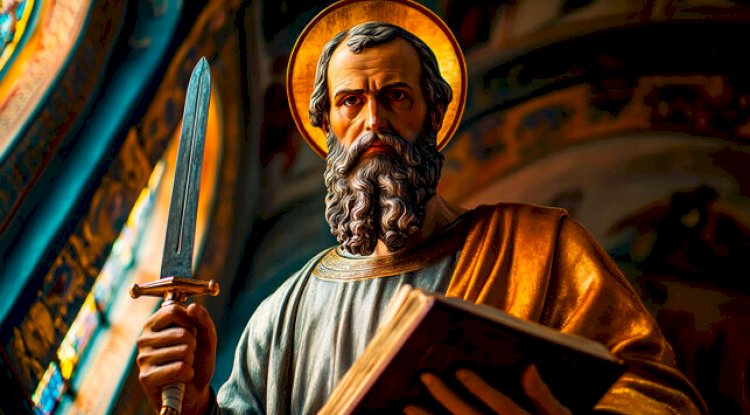
In this article, we reread Paul’s letter to the Galatians—one of the earliest New Testament writings—from within the diverse landscape of first-century Judaism, avoiding later Christian supersessionist (replacement theology) assumptions. The letter addresses a crisis in the Galatian communities, where certain Jewish Christ-accepting evangelists were persuading Gentile believers that full membership in the people of God required adopting Torah observance in the manner of proselytes, including markers such as circumcision and kashrut. Paul vigorously opposes this view, arguing that Gentiles are incorporated into the Abrahamic promise through faith in the Jewish Messiah alone, without needing to become proselytes.
This study will focus on two pivotal sections: Paul’s confrontation with Peter at Antioch and his allegorical interpretation that links Hagar, the Law, and the present Jerusalem to a covenantal status of slavery, in contrast to Sarah, freedom, and the heavenly Jerusalem. Throughout, we trace Paul’s logic from the beginning of the letter to show how his argument emerges from an intra-Jewish debate about the status of Gentile believers in the eschatological age inaugurated by the Messiah.
Establishing Apostolic Authority and Independence (Galatians 1)
Paul begins by identifying himself as an apostle, commissioned not by any human authority but directly by God the Father and Jesus, the Messiah (Gal 1:1–5). He immediately expresses astonishment and dismay that the Galatian believers—former pagans who had come to faith in the Jewish Christ—are so quickly deserting the true gospel (Gal 1:6–7). He pronounces a solemn curse on anyone who preaches a message contrary to the gospel he had originally delivered to them (Gal 1:8–9).
To substantiate his apostolic authority—particularly for issuing severe corrections—Paul opens his letter to the Galatians by recounting his past. He stresses that from his younger years he was a zealous adherent to the Jewish ancestral customs. The term he uses, Ioudaismos (Ἰουδαϊσμός, often rendered “Judaism”), does not signify a defined religion in the modern sense. In the first-century context, clearly defined religious systems such as Christianity or Islam did not yet exist. Instead, Ioudaismos expressed a fervent devotion to Jewish ancestral customs and a distinctive way of life, often in conscious resistance to Hellenistic culture. This same sense appears in 2 Maccabees (2:21; 8:1; 14:38), where the term likewise denotes zealous commitment to Jewish practice and identity.
Paul then explains that God revealed His Son in him (not merely to him) and called him through this revelation to proclaim the gospel among the Gentiles (Gal 1:11–16a). When this happened, Paul did not consult any human authorities or travel to Jerusalem to confer with the Apostles of the Lord. Instead, he withdrew to Arabia and later returned to Damascus (Gal 1:16b–17). By stressing this sequence of events, Paul underscores his independence from human commissioning. Only after three years did he go up to Jerusalem to visit Cephas (Peter) and to meet James, the Lord’s brother—a visit that lasted fifteen days (Gal 1:18–20). Afterward, he went to the regions of Syria and Cilicia. While the churches in Judea heard reports of his transformation, they never met him personally (Gal 1:21–24).
The Jerusalem Agreement and the Antioch Confrontation (Galatians 2)
Even though Paul made regular trips to Jerusalem, being a religious Jew, only fourteen years later, prompted by divine revelation, did he come to Jerusalem with a fellow Jewish believer, Barnabas, and Titus—an uncircumcised Greek (Gal 2:1–2a)—and privately presented his gospel for Gentiles to the prominent apostles to ensure alignment (Gal 2:2b).
Unlike Ruth the Moabite, who fully joined Israel by declaring, “Your people shall be my people, and your God my God” (Ruth 1:16)—the classic proselyte model—Paul’s gospel allowed former pagans to worship Israel’s God through faith in the Messiah without requiring proselyte conversion (circumcision and full Torah observance).
Some modern interpreters—notably those associated with the “Paul within Judaism” perspective, a school to which I belong—often draw a fruitful analogy with Naaman the Syrian (2 Kings 5). Naaman worshiped YHWH exclusively yet remained ethnically, socially, and politically a Syrian, his approach (“Your God will be my God, but my people will still be my people”) differing markedly from Ruth’s thoroughgoing conversion. Even though it is true that in the Hebrew Bible/Old Testament there exist two paradigms of conversion to Israel’s God (Ruth and Naaman), it is important to note that Paul roots his case instead in the figure of Abraham, the scriptural promises, and their fulfillment in the Messiah, as seen in passages like Galatians 3:6–9 and 16–18.
Paul’s gospel thus required exclusive devotion to Israel’s God through Christ, along with obedience to core Torah laws—such as the Ten Commandments and the Jerusalem Council decrees (Acts 15:19–20, 28–29; reiterated in Acts 21:25). These decrees were based on regulations in Leviticus 17–18, which specifically address the “aliens who sojourn among Israel” (Lev 17:8, 10, 12–13, 15). This partial adherence disqualified Gentile believers from the legal protections Rome afforded to Jews. It also distinguished Paul’s approach from that of other Jewish-Christian preachers, who required full Torah observance from Gentile converts.
In many ways, the partial compliance was a disadvantage. Gentile followers of the Jewish Christ were caught in a religious limbo within the Roman Empire. Because they had not undergone proselyte conversion, they were not considered Jews; however, they had abandoned the pagan customs, beliefs, and traditions of their birth. Roman authorities and a significant portion of the populace perceived this renunciation as a dangerous, unpatriotic, and anti-Roman stance.
Paul observes that the apostles did not force Titus to undergo circumcision (Gal 2:3), acknowledged God’s dual commissioning—Peter to the Jews (which will hold significance later in this study) and Paul to the Gentiles (Gal 2:7–8)—and extended a hand of fellowship, confirming Paul’s Gentile mission while they concentrated on the circumcised (Gal 2:9).
Paul then recounts confronting the apostle Peter over a theological and practical error:
11 But when Cephas came to Antioch, I opposed him to his face, because he stood condemned. 12 For prior to the coming of some men from James, he used to eat with the Gentiles, but when they came, he began to withdraw and separate himself, fearing those from the circumcision. 13 The rest of the Jews joined him in hypocrisy, with the result that even Barnabas was carried away by their hypocrisy. (Gal 2:11-13)
Paul elsewhere describes James as a pillar of the Jerusalem church (Gal 2:9). According to Paul’s testimony, James endorsed his Gentile-inclusive gospel at the Jerusalem meeting (Acts 15; Gal 2:7–10). Yet this episode reveals that not everyone in James’s Jewish-Christian circle in Jerusalem affirmed Paul’s approach. Some emissaries—representing stricter Messiah-believing Jews/Judean Christians—evidently viewed Paul’s direction as misguided. Persuaded by their arguments, Peter largely withdrew from table fellowship that included Gentiles, prompting Paul’s rebuke.
This incident underscores a broader norm among ancient Jews, particularly in the Second Temple period (ca. 516 BCE–70 CE): observant Jews generally avoided eating with Gentiles due to concerns over ritual purity, idolatry, and dietary laws (kashrut).
Jubilees 22:16 says very clearly, “Separate yourself from the Gentiles, and do not eat with them.” In Judith 12:1–4, the heroine brings her own provisions to avoid Gentile meals. Tobit 1:10–11 and Daniel 1:8–12 portray pious Jews rejecting royal Gentile fare to avoid defilement, while Joseph and Asenath 7:1 deems Joseph’s refusal to dine with Egyptians an “abomination.” Mishnah (Avodah Zarah 5:5) assumes Jews might share a table with Gentiles but scrutinizes wine for libation risks rather than banning fellowship entirely. Shared meals between Jewish and Gentile believers were feasible with careful precautions—such as sticking to vegetables (as in Daniel’s example, Dan. 1:8-16), permissible wines, or personal provisions—but they demanded intentional effort.
Peter’s prior fellowship with Gentiles (Acts 10:9-48; 11:1-18) did not imply he had abandoned Jewish food laws (he remained, after all, the Apostle to the Jews! (Gal 2:8)). Rather, it signaled a bold theological statement: in Christ, Jews and Gentiles were now united more intimately in shared meals and community than ever before (Eph 2:11-22). However, Paul accused Peter of hypocrisy when, under pressure from envoys from Jerusalem (Gal. 2:12), he withdrew from table fellowship—a retreat that also swayed other Jewish followers, including Barnabas (Gal. 2:13).
The most important verse in this section is this:
But when I saw (ἀλλ᾽ ὅτε εἶδον ὅτι) that they were not walking in step/rightly (οὐκ ὀρθοποδοῦσιν) with the truth of the gospel (ἀλήθειαν τοῦ εὐαγγελίου), I said to Cephas in the presence of all (εἶπον τῷ Κηφᾷ ἔμπροσθεν πάντων), ‘If you, being a Jew (Ἰουδαῖος ὑπάρχων), live as the nations and not as Jews (ἐθνικῶς καὶ οὐχὶ Ἰουδαϊκῶς ζῇς), why do you force the nations (πῶς τὰ ἔθνη ἀναγκάζεις) to adopt Jewish customs (ἰουδαΐζειν)? (Gal 2:14)
Of particular importance is the phrase, “If you, being a Jew, live as the nations [Gentiles] and not as Jews…” There are several ways to understand this.
First, a popular interpretation suggests Peter had, at times, fully adopted a non-Jewish lifestyle. According to this view, he began living exactly like a Gentile. This seems unlikely, however, since Peter was clearly an apostle to the Jews, or the circumcised.
A second interpretation focuses on table fellowship. Since Jews typically did not eat with Gentiles, and Peter did so until the men from James arrived, Paul’s phrase “live like a Gentile” may refer specifically to this practice. In this reading, “living like a Gentile” means “eating with everyone,” while “living like a Jew” means eating only with fellow Jews.
A third, minority interpretation has been proposed by Mark Nanos and developed by scholars associated with the “Paul within Judaism” perspective. They argue that the phrase “live as the nations [Gentiles] and not as Jews” (ἐθνικῶς καὶ οὐχὶ Ἰουδαϊκῶς ζῇς) does not primarily describe Peter’s cultural or dietary habits. Instead, it refers to a theological reality Paul emphasizes. Though a Jew, Peter now “lives” before God—meaning he is justified and in the right covenant relationship with YHVH—in the same way as Gentiles: by grace through faith in Christ. This is apart from reliance on “works of the Law” (like circumcision or dietary observance) as the ongoing basis for justification. On this reading, Paul charges Peter with hypocrisy for withdrawing from table fellowship. Such withdrawal, Paul implies, pressures Gentiles to “Judaize” (ἰουδαΐζειν)—that is, to adopt Jewish ancestral customs—in order to maintain full acceptance within the apostolic community.
This last option has the advantage of tying the accusation more directly to the justification language that immediately follows in vv. 15–16:
15 “We are Jews by nature and not sinners from the Gentiles; 16 nevertheless, knowing that a person is not justified by works of the Law but through faith in Jewish Christ Jesus, even we have believed in Christ Jesus, so that we may be justified by faith in Christ and not by works of the Law; since by works of the Law no flesh will be justified. (Gal 2:15–16)
Israelites, despite being raised under the righteous law of the Torah, are justified before the God of Israel in the same way as Gentiles, who lacked that privilege. For both Jew and Gentile, the Torah’s commandments can provide guidance and blessing, but only faith in God’s promise—Christ Jesus—brings justification.
For Paul, it is clear that if righteousness in the sense of salvation could come simply from observing the commandments of the Torah, then there was no reason for Christ Jesus to pay such a steep price as he did (Gal 2:17–21).
Faith, Abraham, and the Role of the Law (Galatians 3)
In Galatians chapter 3, Paul sharply rebukes the Galatian believers: “You foolish Galatians! Who has bewitched you? Before your very eyes, Jesus Christ was clearly/publicly portrayed (προεγράφη) as crucified” (Gal 3:1). He then launches a series of rhetorical questions, pressing them to acknowledge that they received the Holy Spirit and experienced miracles by hearing with faith—before adopting full Torah observance, not afterward (Gal 3:2–5).
Paul then draws a direct parallel to Abraham: just as the Galatians received God’s blessing through faith alone, so Abraham was declared righteous by God long before circumcision, on the basis of faith alone. Moreover, Paul makes the point that the Holy Scripture foretold that Abraham’s trajectory of faith would bless all nations: “All the nations will be blessed through you” (Gal 3:6–9).
Building on his earlier point that both pagans and Israelites are sinners (Gal 2:15–17), Paul argues that no one can perfectly keep all the demands of God’s law. Therefore, even those who sincerely seek to obey the entire Torah given through Moses remain under God’s curse. He makes a well-thought-out case that Christ, the Jewish Messiah, freed Israel from this curse by taking it on himself in his sacrificial death (Gal 3:10–14). In doing so, Christ not only freed Israelites from the curse but also opened the way for the Gentiles to receive the promised Spirit through faith, exactly as Abraham had.
Paul further clarifies that God’s covenant with Abraham was made with Abraham and his singular “seed”—Christ, who would come through him—not with multiple “seeds” (Gal 3:15–18). Abraham’s righteousness before God was solely a result of his faith in God’s promise.
He preempts the logical question of the Galatian audience: Why, then, was the Law given at all? Then Paul answers that it was added because of Israel’s transgressions, serving as a temporary, necessary measure until the promised Seed arrived (Gal 3:19). Anticipating potential misunderstandings, Paul addresses the objection that his teaching suggests the holy, righteous, and good Law of Moses is in opposition to God’s promises. His response is unequivocal: absolutely not. The Law, however excellent, was never intended to impart righteousness (Gal 3:21–22).
Rather, Paul views the Law as a priceless gift to Israel, functioning as a guardian or tutor to lead them toward the promise—Christ Jesus, Abraham’s Seed (Gal 3:23–24). Now that Christ has come and believers have placed faith in him, the Law’s role as guardian has reached its intended end. While distinctions between Jew and Gentile, slave and free, and male and female still exist in some respects, in the crucial matter of standing before God, there is no preference or hierarchy. All who believe—Jew or Gentile—share equally in the inheritance as Abraham’s true children (Gal 3:25–29).
Heirs, Allegory, and the Two Covenants (Galatians 4)
In chapter 4, Paul approaches the believer’s relationship to the Law from another perspective, using the analogy of an underage heir in a wealthy household with servants. Though destined to own everything, the child-heir is currently subject to restrictions and supervision no different from that of the servants. Similarly, both Jews and Gentiles lived under such limitation until God sent his Spirit, enabling them to receive his Son and cry “Abba, Father.” Faith transforms believers from the status of supervised servants to mature sons (Gal 4:1–7).
Though Paul includes Israelites in his argument, his primary focus is the Gentile believers. He urges them not to pursue full Torah obedience, for they have already been declared sons through the promise. To place themselves under the Law would be to revert to a lesser, supervised status—no matter how beneficial and righteous the Law is—when through faith they are already mature sons in Christ.
To heed the false teaching of certain Jewish-Christian influencers—that Gentile believers must take on the full yoke of Torah commandments like Israelites—would be to enslave themselves again to something inferior to the perfect freedom they already possess by grace through faith (Gal 4:8–11).
Then Paul fondly recalls how warmly the Galatians received him when, despite his physical illness, he first preached the gospel to them; they treated him with extraordinary hospitality. Yet now, influenced by these rival teachers, they have turned against him and refuse his message (Gal 4:12–16). He continues:
21 Tell me, you who want to be under Law, do you not listen to the Law? (Gal 4:21)
If you are in a position to help this ministry sustain and grow, please click HERE. We will be so grateful!
Paul is challenging Galatian Gentile Christians who are entertaining proselyte conversion to pay attention to the Torah itself and see that his preaching aligns fully with this foundational Jewish text (Gal 4:21).
22 For it is written that Abraham had two sons, one by the slave woman and one by the free woman. 23 But the son by the slave woman was born according to the flesh, and the son by the free woman through the promise. (Gal 4:22-23)
This is a summary of one of the foundational Torah stories. The most challenging section of the entire letter to Galatians comes next:
24 This is speaking allegorically (ἅτινά ἐστιν ἀλληγορούμενα), for these women are two covenants (γάρ εἰσιν δύο διαθῆκαι): one coming from Mount Sinai (μία μὲν ἀπὸ ὄρους Σινᾶ) giving birth to children who are to be slaves (εἰς δουλείαν γεννῶσα); she is Hagar (ἥτις ἐστὶν Ἁγάρ). (Gal 4:24)
25 Now this Hagar is Mount Sinai in Arabia and corresponds to the present Jerusalem (συστοιχεῖ δὲ τῇ νῦν Ἰερουσαλήμ), for she is enslaved with her children (δουλεύει γὰρ μετὰ τῶν τέκνων αὐτῆς). (Gal 4:25)
Paul’s identification of Hagar with “the present Jerusalem” (τῇ νῦν Ἰερουσαλήμ), which “is enslaved with her children” (δουλεύει γὰρ μετὰ τῶν τέκνων αὐτῆς), poses the sharpest challenge to non-supersessionist readings of the allegory, as it appears to portray contemporary Torah-observant Judaism—centered in Jerusalem—as enslaved. However, several interpretive options within Pauline scholarship avoid equating this “slavery” with Torah observance itself or implying the replacement of Israel.
Paul—for his rhetorical purposes—focuses on two covenants: The first covenant is the great covenant YHVH made with Israel through the mediation of Moses at Mount Sinai. The second covenant is the one YHVH made with Abraham and Christ Jesus (His seed) (Gal 3:15–18).
Here Paul states in advance that he will speak allegorically, meaning that the various Torah characters and places will represent some other topics and concepts. For those reading Galatians from a traditional Christian perspective, there is little difficulty: Judaism as represented by the Law of Moses is portrayed as a religion of slavery that has outlived its purpose. However, for a reader approaching Galatians from within the first-century Jewish milieu, the letter’s sharp critique must be reconciled with Apostle Paul’s continual self-identification as a Pharisee even after his conversion to faith in Christ (Acts 23:6; cf. Phil 3:5) and his public actions tailored to refute false rumors that he was teaching Jewish believers in the Diaspora to forsake the Law of Moses, to cease circumcising their children, or to abandon traditions of the fathers (Acts 21:20–24).
To understand Apostle Paul’s logic of linking the Law of Moses to slavery, we need to grasp its basic characteristic in the Roman world.
Understanding First-Century Roman Slavery
In the first-century Roman Empire, slavery was a foundational institution, integral to the economy, households, and social order—distinct from the racially based slavery that we are more familiar with. Roman slaves typically came from war captives, piracy, debt, infant abandonment, or birth to enslaved mothers, without rigid racial categories. Estimates place slaves at 10–15% of the empire’s population (higher in “Italy” and urban Rome, up to 30–40%).
Even though slaves were legally property and had no rights of their own, like Roman citizens, they lived in very different conditions. For example, urban household slaves often had skilled, trusted jobs (like teachers, managers, and doctors; some were even leading Stoic philosophers like Epictetus) and could earn manumission (being set free), which gave them citizenship and connections to patrons. In contrast, rural laborers, miners, or those in prostitution endured brutal exploitation. Philosophers like Seneca pushed for humane treatment of slaves because they saw them as possible equals. Manumission was frequent for skilled slaves, who could accumulate savings and form families.
Paul’s argument becomes clearer when we recognize that he did not view slavery with the modern sense of moral outrage but as part of a fallen, temporary social order (1 Cor 7:20-24). This explains why he never condemned the institution outright, focusing instead—as with Onesimus—on reconciliation and spiritual brotherhood within existing structures (Phlm 15–16). Paul’s concern was eschatological, not socio-political; believing Christ’s return was imminent (1 Thess 4:15-17), he sought to define community life in the messianic age rather than overthrow the present world (1 Cor 7:29-31). Thus, his acceptance of slavery reflects a pastoral focus on spiritual readiness, not social revolution.
How does Paul use his slavery analogy?
This context illuminates Paul’s allegory in Galatians 4, where he employs “slavery” (δουλεία) rhetorically to contrast subjection with the freedom found in Christ. As observed, many Roman household slaves occupied trusted positions—educators, παιδαγωγοί, administrators—entailing oversight and responsibility, akin to the “guardian” (παιδαγωγός, Galatians 3:24–25) role of the Law. Likely acquainted with this reality as a Roman citizen, Paul nuances the metaphor by drawing on this respected aspect of slavery: even esteemed slaves remained under temporary supervision until manumission, paralleling an heir’s minority.
Immediately before the allegory, Paul develops this household analogy in Galatians 4:1–7: an underage heir, though destined to inherit, is no different from a slave—subject to guardian/trustee (ἐπίτροποι, epitropoi) and administrator (οἰκονόμοι, oikonomoi), trusted household managers—until the father’s appointed time. Similarly, believers (whether Jews under the Law or Gentiles under τὰ στοιχεῖα, the elemental forces) lived in a state of provisional subjection until God sent His Son and Spirit, granting them adoption and full sonship. Thus, “slavery” here signifies not degradation but a temporary immaturity in need of guidance/management—a form of protective oversight meant to lead toward maturity and inheritance in the future.
In other words, the Apostle Paul understood the Mosaic Law as a good and purposeful gift—a guardian and teacher (paidagōgos)—that functioned until the arrival of Christ. Through faith in Christ, believers are granted freedom from this tutelage and elevated to the full status of mature sonship.
This emphasis reinforces that Paul’s rhetoric targets the risk of Gentiles voluntarily returning to a lesser status by adopting requirements for Jewish proselytes/converts, not in any way a devaluation of the Torah’s ongoing role for Jews/Israel. While the Law remains a good, holy, and purposeful gift to Israel—functioning positively as a guardian and teacher (παιδαγωγός)—Paul nevertheless presents the Sinai covenant as chronologically and soteriologically subordinate to the prior Abrahamic promise. Its disciplinary regime has reached its intended end (telos) in Christ for all believers in the messianic age, even as its enduring sanctity and guidance for Israel are not negated.
This subordination, while affirming the Torah’s holiness and goodness as a divine gift to Israel, represents a bold eschatological claim: in the age of the Messiah, the Sinai covenant’s function as guide/tutor (παιδαγωγός, paidagōgos) has reached its goal (τέλος, telos) for believers (3:24–25; 4:1–7). Paul’s rhetoric—though rooted in Jewish apocalyptic and midrashic traditions—reconfigures covenantal priorities in a way that many contemporary Jews would have found provocative, even as it stops short of rejecting the Torah outright.
Mount Sinai, the Law, Jerusalem and Hagar
Hagar and Ishmael—whose name means “God hears”—are held within the embrace of divine compassion, beloved children of the Creator. Yet their story remains outside the covenant of promise, a distinct line that flows not through them but through Sarah and Isaac. Paul, with poetic precision, links Hagar to the Law of Moses: a gift of guidance, a tutor for a season—wholesome, yet unable to bestow righteousness or grant salvation. It is very useful in illuminating the path, but it cannot walk it for us; it may instruct, but it cannot rescue, redeem, or save. Paul does not deny the Law’s enduring benefit, sanctity, and importance for Israel but argues that its disciplinary role has reached its ultimate goal in Christ.
Mount Sinai, also known as Horeb, holds profound significance in the Bible, particularly in Exodus chapters 19–34. It is the sacred site where God first appeared to Moses in a burning bush (Exodus 3) and later manifested His presence dramatically to the Israelites following their deliverance from Egypt. Amid thunder, lightning, fire, smoke, and earthquakes, God descended upon the mountain (Exod 19:16–18). Moses ascended repeatedly to receive the Ten Commandments inscribed on stone tablets, along with laws establishing the covenant with Israel. During his absence, the people’s idolatry with the golden calf provoked divine judgment (Exod 32). Paul, therefore, connects Mount Sinai to Israel, the covenant they entered, the law they received, and their disobedience that followed. This connection extends to Jerusalem, Israel’s capital.
With this in view, Paul continues:
26 But the Jerusalem above is free; she is our mother (ἡ δὲ ἄνω Ἰερουσαλὴμ ἐλευθέρα ἐστίν ἥτις ἐστὶν μήτηρ ἡμῶν).
27 For it is written:
“Rejoice, infertile one, you who do not give birth;
Break forth and shout, you who are not in labor;
For the children of the desolate one are more numerous
Than those of the one who has a husband.” (Gal 4:26-27)
The quotation in Galatians 4:27 is directly from Isaiah 54:1 in the Old Testament, where the prophet consoles exiled Israel—likened to a barren, desolate woman—promising miraculous restoration and abundant offspring through God’s grace, not human effort.
It is possible that Paul’s quotation of Isaiah 54:1 in Galatians 4:27 serves as an early witness to a precursor of the Torah-Haftarah reading tradition (in which prophetic portions from the Hebrew Bible are linked to Torah readings), where Torah texts—such as the narrative of Abraham, Sarah, and Hagar in Genesis—are paired with prophetic texts in a manner that may appear arbitrary but reflects interpretive connections common in Second Temple Judaism. (Mark Nanos expressed this idea in one of his roundtable talks at the Israel Bible Center).
The “desolate” yet fruitful mother represents Sarah, highlighting that believers—particularly Gentiles who enter through faith in Abraham’s Seed (Christ)—will far surpass in number those who seek to serve Israel’s God via the Mosaic Law, thus fulfilling God’s promise in surprising abundance.
He then, addressing Gentile Christ-followers in Galatia, writes to them an astonishing fact:
28 And you, brothers, like Isaac, are children of promise (ἐπαγγελίας τέκνα ἐστέ).
29 But as at that time the son who was born according to the flesh (σάρκα) persecuted/contested (ἐδίωκεν) the one who was born according to the Spirit (πνεῦμα), so it is even now.
30 But what does the Scripture say? “Drive out the slave woman (παιδίσκην) and her son, for the son of the slave woman shall not be an heir (κληρονομή) with the son of the free woman (ἐλευθέρας).”
31 So then, brothers, we are not children of a slave woman (παιδίσκης), but of the free woman (ἐλευθέρας). (Gal 4:28-31)
In Galatians 4:28–31, Paul delivers a stunning climax to his allegory, directly addressing the Gentile believers in Israel’s God through Jewish Christ as also being “children of promise” akin to Isaac (v. 28). By identifying uncircumcised former pagans with the freeborn heir, Paul subverts traditional covenantal boundaries: full inheritance in Abraham’s blessing now belongs to those born “according to the Spirit,” whether from Israel or the nations, through faith in the Messiah, not “according to the flesh” via Sinai’s Torah-mediated covenant.
Paul alludes to Ishmael “persecuting/contesting” Isaac (v. 29; see Gen 21:9) to portray the troubling influence of his opponents as a modern version of that old rivalry. Yet when he quotes Scripture—“Cast out the slave woman and her son” (Gen 21:10)—he is not calling for the rejection or replacement of Israel. Instead, he issues a strong warning to Gentile believers: do not surrender your freedom by submitting to circumcision and the full requirements of the Mosaic Law as proselytes. All believers—Jews and Gentiles together—are children of the free woman, the heavenly Jerusalem, and receive their eschatological freedom and inheritance as heirs solely through God’s promise.
In Galatians 5–6, Paul further defines freedom in Christ as a life led by the Spirit, not the flesh. This freedom is expressed through loving service, bearing others’ burdens, and sowing to the Spirit, which yields virtues like love and peace. It rejects both legalism and license, focusing instead on faith working through love. Paul’s only boast is in the crucified Jewish Messiah, who inaugurates a new creation. This reality renders external Jewish rites—which served as markers of Israelite covenant identity—anachronistic for Gentile worshipers of Israel’s God through the Jewish Christ.
Conclusion
Paul’s letter to the Galatians addresses a critical pastoral crisis: Gentile believers, having entered the people of God through faith in the Messiah, were being persuaded by rival Jewish Christ‑followers that full covenantal membership required them to become proselytes—to adopt circumcision and full Torah observance. Many have read Paul’s vehement response through a later, supersessionist lens, interpreting it as a rejection of Judaism itself. Positioned firmly within the diverse landscape of first-century Judaism, this rereading presents a distinct perspective: Paul participates in an internal Jewish discussion concerning the eschatological standing of Gentiles in the messianic era that Jesus has initiated. His argument is not a wholesale rejection of the Torah—whose goodness and sanctity for Israel he elsewhere affirms—but a fierce opposition to its imposition on Gentiles as a requirement for full covenantal belonging, coupled with an eschatological claim that its guardianship role has reached its fulfillment in Christ.
Through a close examination of the Antioch incident and the Hagar‑Sarah allegory, we have traced Paul’s Jewish logic. He employs midrashic typology, scriptural allegory, and covenantal reasoning to demonstrate that the blessing promised to Abraham reaches the nations through faith in the singular “Seed,” Christ. The Law, a holy and good gift to Israel, functioned as a guardian until the Promise arrived. To require Gentiles to undergo proselyte conversion is, in Paul’s metaphor, to force them back into a state of minority and slavery—a temporary, supervised status from which Christ has set all believers free. Paul’s gospel thus affirms a radical, faith-based inclusion of Gentiles as equal heirs, while upholding the Torah’s enduring sanctity and guidance for Israel—though his reconfiguration of its soteriological and disciplinary role in the messianic age introduces a provocative intra-Jewish tension.
This interpretation carries serious repercussions. For Christian theology, it challenges entrenched supersessionist readings and recovers Paul as a Jewish thinker whose message of grace is rooted in, rather than opposed to, Israel’s covenantal story. It affirms the enduring validity of God’s covenant with the Jewish people. For Jewish‑Christian dialogue, it reframes Paul not as an apostate but as a faithful, if contentious, first‑century Jew whose messianic convictions led him to expand the boundaries of Abraham’s family in a way that remains intelligible within Jewish tradition. Ultimately, rereading Galatians “within Judaism” invites both communities to see Paul as a bridge—a figure whose passionate argument for Gentile inclusion without proselyte conversion can foster mutual understanding and respect for our shared and distinctive covenantal callings.
What's Your Reaction?